

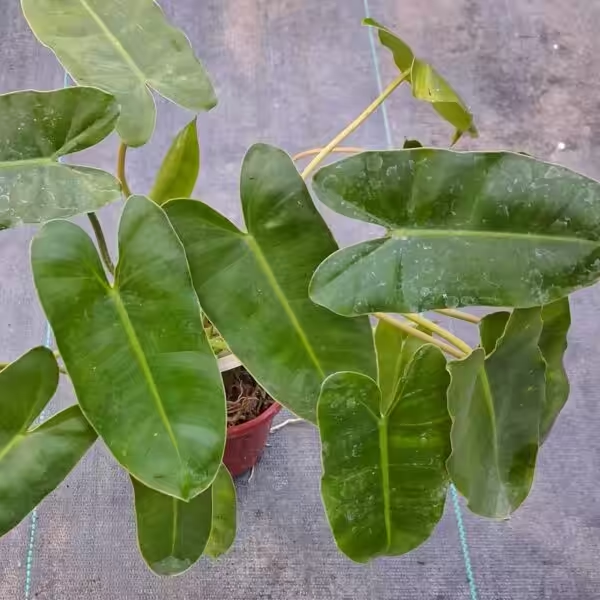


Philodendron Burle Marx Plant
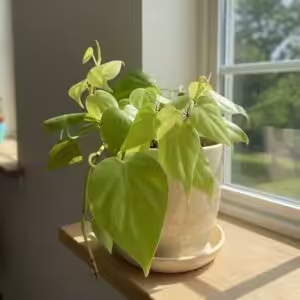
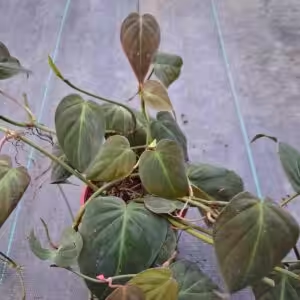
Philodendron Burle Marx is a captivating tropical aroid named after the renowned Brazilian landscape architect Roberto burle marx, who often used it in his lush garden designs. This plant is cherished for its elongated, glossy leaves that emerge in a deep, vibrant green and develop into dense clusters, creating a naturally layered, jungle-like effect. Unlike many climbing philodendrons, burle marx tends to grow in a spreading, bushy manner, making it perfect for ground cover in tropical landscapes or as a statement plant in containers indoors. Its resilience, adaptability to varying light conditions, and air-purifying qualities make it not only a visually stunning choice but also an easy-to-care-for companion for plant lovers. With its sculptural presence and tropical charm, the philodendron burle marx embodies both elegance and wild beauty, turning any space into a piece of the rainforest.
Here are some care tips for Philodendron Burle Marx :
🌞 Light :
Thrives in bright, indirect light but can also adapt to medium or low light. Avoid direct harsh sunlight, as it can scorch the leaves.
💧 Water :
Keep the soil evenly moist but not soggy. Water when the top 1–2 inches of soil feel dry. Reduce watering slightly in winter when growth slows.
💦 Humidity :
Loves high humidity (60%+), but will also adapt to average household levels. Misting, pebble trays, or a humidifier can encourage lush growth.
🌡️ Temperature :
Prefers warm temperatures between 18–30°c. Protect from cold drafts or sudden temperature drops.
🪴 Soil :
Use a well-draining, airy mix—ideally one with peat, perlite, and orchid bark. This prevents root rot while retaining enough moisture.
⚡ Fertilizer :
Feed with a balanced liquid fertilizer every 4–6 weeks during the growing season (spring and summer). Reduce in autumn and winter.
✂️ Pruning :
Trim leggy or yellowing leaves to maintain its compact shape. Wipe leaves occasionally to remove dust and help with photosynthesis.
🧺 Repotting :
Repot every 1–2 years or when roots outgrow the pot, ideally in spring.
🐛 Pests :
Generally resistant but may attract aphids, mealybugs, or spider mites. Inspect regularly and treat with neem oil or insecticidal soap if needed.
👉 By following these simple guidelines, your plant will thrive and become a beautiful, cascading feature in your home!







Ankita Mukherjee –
Lovely plants 😊